Tesla’s European Semi plans would bring another competitor into an electric-lorry market where major British fleets already operate battery-powered trucks. Its prospects depend on the combination of vehicle capability, purchase terms, charging and support. Headline range provides only part of that comparison, particularly when European and American versions differ.
The announced timetable remains a target. Reporting from IAA Transportation on 18 September, FreightWaves’ Thomas Wasson described European demonstrations planned for the first half of 2027. At that keynote, Tesla Semi head Dan Priestley described deliveries as “targeting by the end of next year”, according to Wasson’s report. For fleet planning, those targets still need to become confirmed supply dates and approval terms. [1]
The European specification also differs from the American range headline. Auto Express’s September launch report describes an initial European model rated at approximately 550 kilometres, or 342 miles. The American Long Range version, advertised at 500 miles, was not announced for initial European sale. British buyers therefore need to assess the European model’s claimed capability against their own routes. [2]
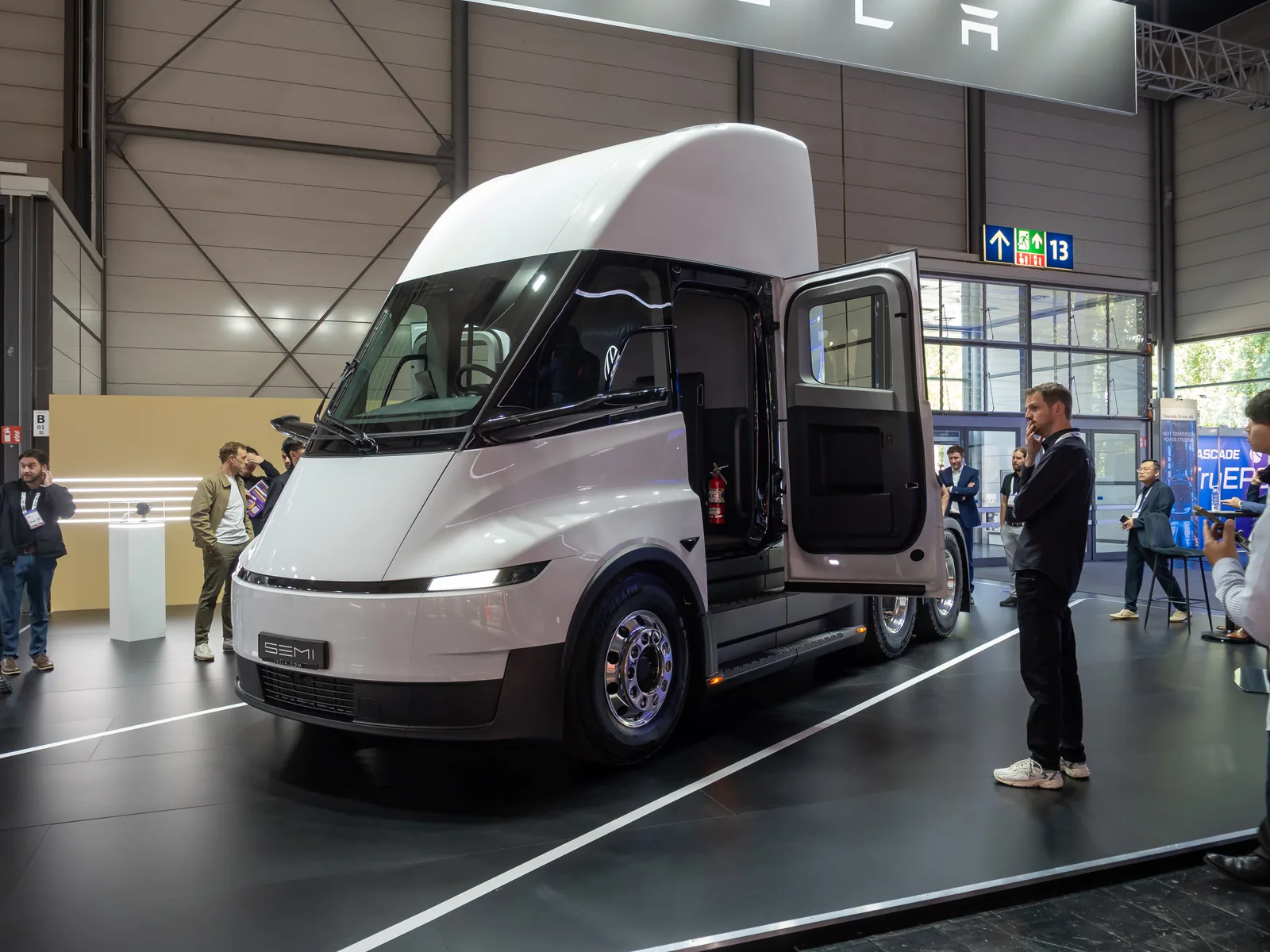

FreightWaves reports the 550km rating at 40 tonnes gross combination weight, with 800kW charging capability and roughly 60% range recovery in 30 minutes. It also reports a design capacity of up to 44 tonnes. Operating at that higher weight would require its own range assessment. Cargo payload also depends on the trailer, load distribution and operating configuration, alongside the tractor’s kerb weight. Fleet trials would need to test the combination actually carrying customers’ goods. [1]
The central driving position is relevant to the usual left- versus right-hand-drive question. Auto Express describes the central seat. British approval covers the vehicle more broadly: the Vehicle Certification Agency’s guidance requires applicable technical compliance evidence. Buyers would still need to check the supplied vehicle’s approval and operational specification; seating layout alone is not evidence of compliance. [2] [3]
Purchase-price competitiveness is unresolved. This review could not verify a published British Semi purchase price. A British quotation is needed before an operator can judge an American price report or earlier launch target against local alternatives. A useful cost comparison would include the truck, finance, depot works, electricity, maintenance, insurance and downtime arrangements for the same job.
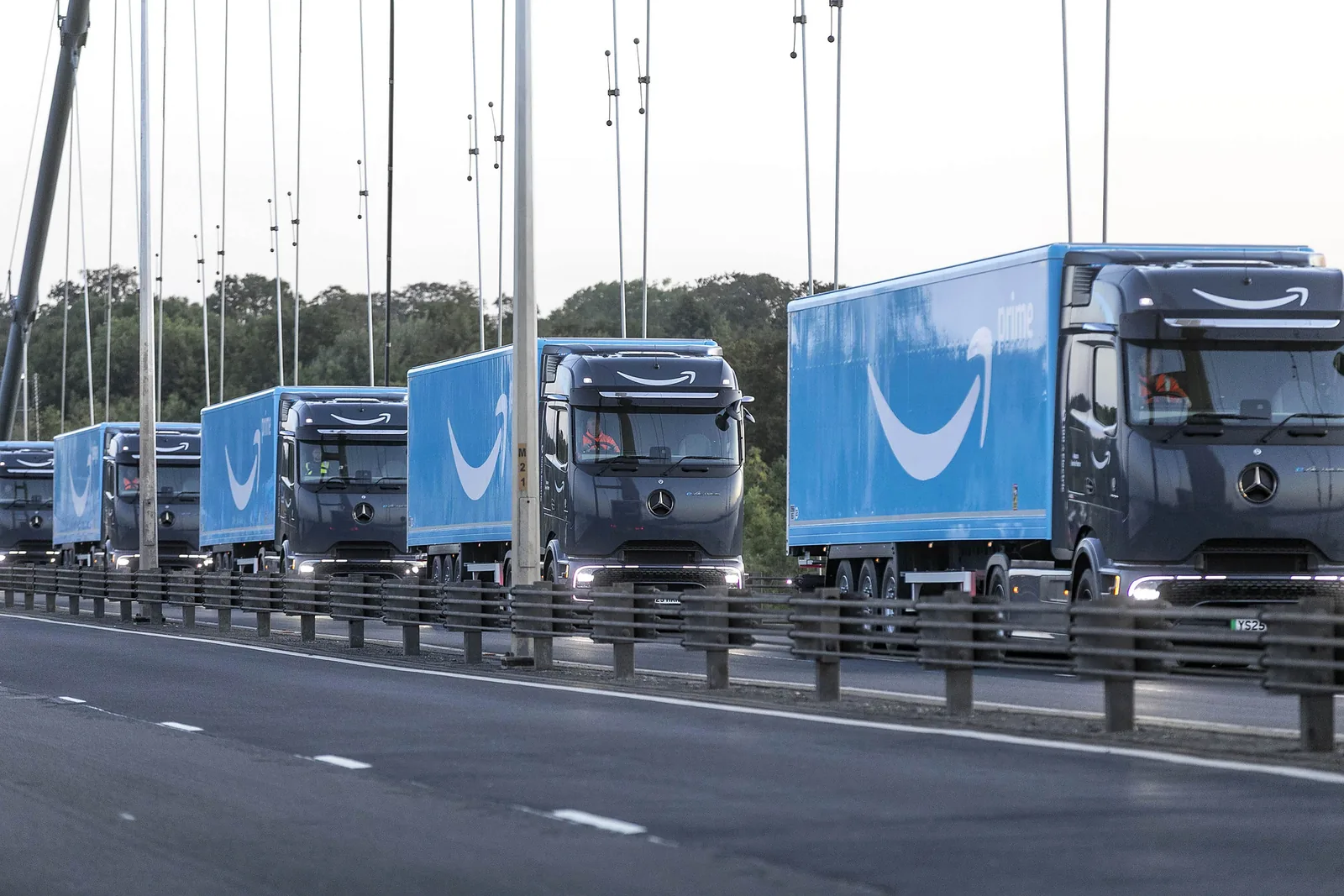
The competition already has operating experience with British customers. Amazon announced the first vehicles from its new Mercedes-Benz eActros 600 order on UK roads in November 2025. Carrier partners use them between logistics hubs. Amazon describes 500km of range and up to 22 tonnes of cargo, supported by 360kW depot chargers taking the battery from 20% to 80% in just over an hour. The 160-truck total was published as its eventual rollout target. [4]
DHL’s four 40-tonne Volvo FM Electrics, introduced here in 2023, illustrate a different requirement. Their quoted range of up to 300km covered its retail and automotive round trips. DHL also highlighted controls shared with diesel FM models, easing driver transition. Those features help explain the practical suitability described in its deployment announcement. [5]
European products are developing further. Volvo’s April 2026 announcement gives its new extended-range FH Aero Electric a manufacturer estimate of up to 700km, 44-tonne gross combination weight and megawatt charging. Rollout starts in 2026, so these figures describe a newer offering than DHL’s existing vehicles. Volvo explicitly identifies weather, weight and driver performance as range variables. A meaningful range comparison would require matched conditions and vehicle configurations. [6]
Infrastructure can strengthen or limit any truck’s business case. Wincanton’s programme combines DAF, Volvo and Renault electric trucks with depot charging at four locations and is intended to gather operational lessons. The government-backed Zero Emission HGV and Infrastructure Demonstrator programme also supports vehicles and public or depot infrastructure while collecting evidence about real duty cycles. Its procurement and multiyear demonstration phases make individual deployment progress worth checking. [7] [8]
Public truck charging is emerging too. GRIDSERVE’s Baldock and Exeter hubs use drive-through bays with layouts assessed for lorry manoeuvres. UK Power Networks’ Future Fleet work explains the other side: simultaneous charging can require substantial local capacity, while scheduling, batteries or flexible connections may reduce peak demand. Fleet budgets and schedules therefore need to account for connection capacity as well as charger power. [9] [10]
Tesla could add a truck, charging and fleet-management alternative. Semi requires truck-specific charging. Tesla’s support page says ordinary Superchargers cannot charge Semi and its Megacharger sites currently support Tesla trucks only. FreightWaves describes planned dedicated European Semi service support. Named workshops and contracted response times would help British operators assess repair cover. [11] [1]
A delivered, approved vehicle that meets routes and payload needs, backed by competitive quotations and dependable charging and repairs, would give fleets a practical reason to consider Tesla. Delays, expensive connections or uncertain support could restrict that opportunity. European operators already have alternatives to assess against actual work; Tesla’s case will depend on similarly verifiable operating terms and results.
Sources
The links below support the statements attributed to them. A source’s own claims are identified in the article.
- FreightWaves’ European launch reportFreightWaves · Named firsthand IAA conference reporting, direct quotations ofTeslaSemi headDanPriestley; not an independently measured technical test
- Auto Express’s European specification reportAuto Express · NamedcontemporaneousIAAlaunchreporting
- VCA approval guidanceVehicle Certification Agency · primary
- Amazon’s UK deployment announcementAmazon · primary
- DHL’s UK Volvo deploymentDHL · primary
- Volvo’s 2026 product announcementVolvo Trucks UK · primary
- Wincanton’s programmeWincanton · primary
- Innovate UK’s demonstrator programmeInnovate UK Business Connect · primary
- GRIDSERVE’s operating hubsGRIDSERVE · primary
- UK Power Networks’ grid workUK Power Networks · primary
- Tesla’s Semi charging guidanceTesla · primary